VILPA: Dead hang or active hang
In Calicen, a dead or active hang is a short exercise snack that breaks up sitting with grip, forearm, shoulder, and scapular work. It can help the upper body feel better organized under an overhead load, but “reorganizing muscles” is a coaching description—not a proven anatomical reset or cure.
Arms
Compound
At a glance
Difficulty
Intermediate
Exercise Type
Vilpa
Muscle Group
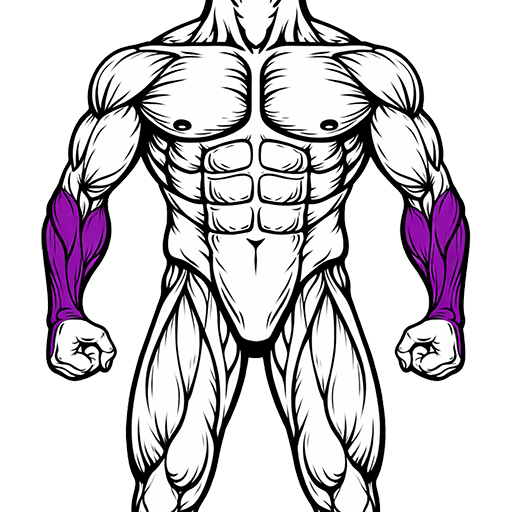
Forearms
Equipment
Bodyweight
Force Type
Pull
Mechanics
Compound
Why this exercise matters
Hanging is valuable less for calorie burn and more for preserving useful upper-body capacity. Its best long-term argument is grip and overhead competence, both important for training and daily tasks.
- All-day activity — A short hang adds a fresh muscular demand to otherwise sedentary hours, though its whole-body AMPK effect is likely smaller than vigorous leg or full-body snacks.
- Grip reserve — The hands and forearms practice supporting bodyweight; lower grip strength is associated with more limitations in activities of daily living, although hanging itself has not been proven to extend life.
- Shoulder organization — An active hang teaches scapular support and controlled overhead loading instead of simply collapsing into the joints.
- Pulling foundation — Improved tolerance and control in the start position supports pull-ups, climbing, carrying, and reaching tasks.
How to perform
Treat the practice as a brief, deliberate movement break and keep the prescribed quality more important than the clock.
- Setup — Use Pull-up bar and clear enough space to hold or repeat the position safely.
- Prescription — Complete 3 × 15–40 sec.
- Key cue — Use an active shoulder position if passive hanging is uncomfortable.
- Reset — Relax fully or return to an easy position between efforts rather than carrying unnecessary tension.
- Scale — Feet-assisted hang is the easiest scale; avoid painful shoulders.
What to avoid
Do not let the short format justify poor positioning or excessive effort. The activity should remain repeatable and symptom-free.
- Exercise-specific safety — Feet-assisted hang is the easiest scale; avoid painful shoulders.
- Breathing/tension — Use an active shoulder position if passive hanging is uncomfortable; avoid unnecessary breath-holding unless the technique explicitly requires a gentle respiratory phase.
- Stop criteria — Stop for sharp pain, numbness, dizziness, or loss of control.
- Terminology — This website category is broader than the scientific definition of VILPA.
- Passive overload — Do not force a fully passive hang through shoulder pain or instability; use foot assistance and an active shoulder position when needed.
Target Muscle