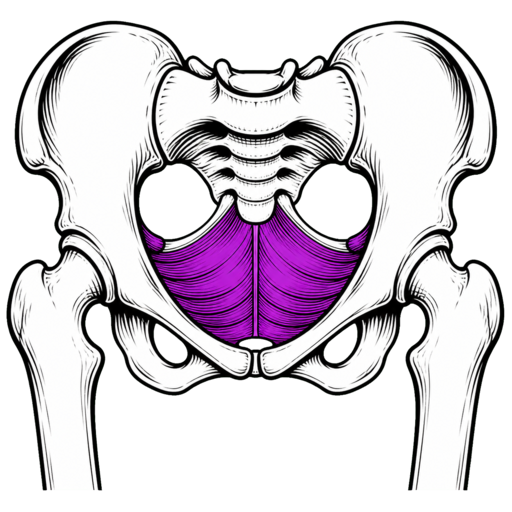
VILPA: Pelvic-floor contractions (Kegels)
In Calicen, pelvic-floor contractions are placed every few hours as a discreet exercise snack and adherence cue. Their primary value is specialized pelvic health—not high calorie use or a large whole-body AMPK response—through better contraction, relaxation, endurance, and timing of the muscles that support continence.
Strength
At a glance
Difficulty
Easy
Exercise Type
Vilpa
Muscle Group
Pelvic Floor
Equipment
Bodyweight
Force Type
Static
Mechanics
Isolation
Why this exercise matters
Kegels are included because a tiny, repeatable practice can protect a specialized function that strongly affects confidence and quality of life. The schedule helps consistency; the benefit is pelvic-floor training itself.
- Continence control — Pelvic-floor muscle training is a first-line conservative treatment for many women with stress or mixed urinary incontinence.
- Pressure timing — Better coordination helps the pelvic floor respond before coughing, lifting, running, or sudden increases in abdominal pressure.
- Endurance and release — Training both a clear contraction and full relaxation supports control; constant squeezing is not the goal.
- Daily adherence — Short, private sets attached to daily cues make the consistency required for neuromuscular improvement easier to achieve.
How to perform
Treat the practice as a brief, deliberate movement break and keep the prescribed quality more important than the clock.
- Setup — Use None and clear enough space to hold or repeat the position safely.
- Prescription — Complete 8–12 reps: 3–5 sec contract + equal relax.
- Key cue — Contract without holding breath or bracing glutes hard.
- Reset — Relax fully or return to an easy position between efforts rather than carrying unnecessary tension.
- Scale — Full relaxation matters; pelvic pain or overactivity warrants specialist guidance.
What to avoid
Do not let the short format justify poor positioning or excessive effort. The activity should remain repeatable and symptom-free.
- Exercise-specific safety — Full relaxation matters; pelvic pain or overactivity warrants specialist guidance.
- Breathing/tension — Contract without holding breath or bracing glutes hard; avoid unnecessary breath-holding unless the technique explicitly requires a gentle respiratory phase.
- Stop criteria — Stop for sharp pain, numbness, dizziness, or loss of control.
- Terminology — This website category is broader than the scientific definition of VILPA.
- Failure to relax — Constant squeezing can worsen urgency, pain, or pelvic tension; every contraction needs a full release, and symptoms may require pelvic-health assessment.
Target Muscle