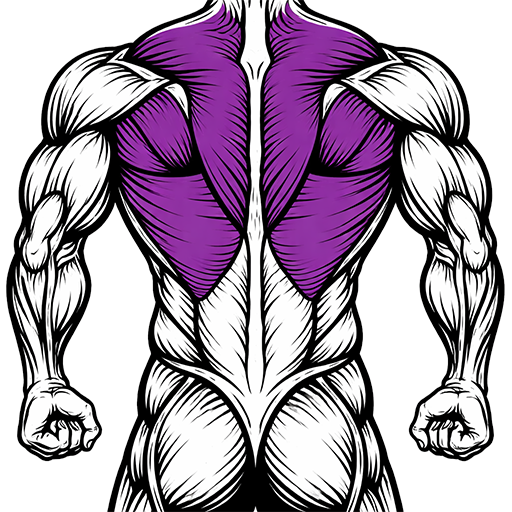
Seated cable row
Seated cable row trains Upper back through horizontal pull; Lats; biceps; rear delts contributes to the repetition. Coaches select it for a defined reason: Train scapular retraction with smooth resistance. Compared with nearby options, it provides easy grip and torso-angle variations.
Back
Compound
At a glance
Difficulty
Easy
Exercise Type
Hypertrophy
Muscle Group
Upper Back
Equipment
Cable
Force Type
Pull
Mechanics
Compound
Why this exercise matters
Seated cable row matters because it has a clearly defined training role: Train scapular retraction with smooth resistance. Its structure keeps the exercise choice specific to the intended adaptation.
- Primary stimulus — Upper back leads the movement; Lats; biceps; rear delts contributes.
- Programming role — Train scapular retraction with smooth resistance.
- Why this version — Easy grip and torso-angle variations.
How to perform
Use 2–4 × 8–15 reps as a working template and allow about 2min between sets. The aim is repeatable tension, not simply moving the heaviest load.
- Equipment setup — Prepare Cable machine and choose a load that preserves the intended horizontal pull.
- Starting position — Brace against the support or footplates and begin with long arms and a quiet torso.
- Repetition path — Draw the elbows back and bring the shoulder blades together, then release slowly.
- Exercise-specific cue — Keep torso quiet; finish without shrugging.
- Set endpoint — End the set when the target muscles can no longer control the same path and tempo.
What to avoid
The main safeguard is exercise-specific: Keep torso quiet; finish without shrugging. Load and range should preserve the defining horizontal pull pattern.
- Setup risk — Confirm that Cable machine is stable and correctly adjusted before loading.
- Technique limit — Do not chase repetitions once the intended path changes or another body segment takes over.
- Joint response — Reduce load or range for sharp, increasing, or joint-specific pain.
- Progression — Add resistance only after the listed cue can be maintained across the whole set.
Target Muscle