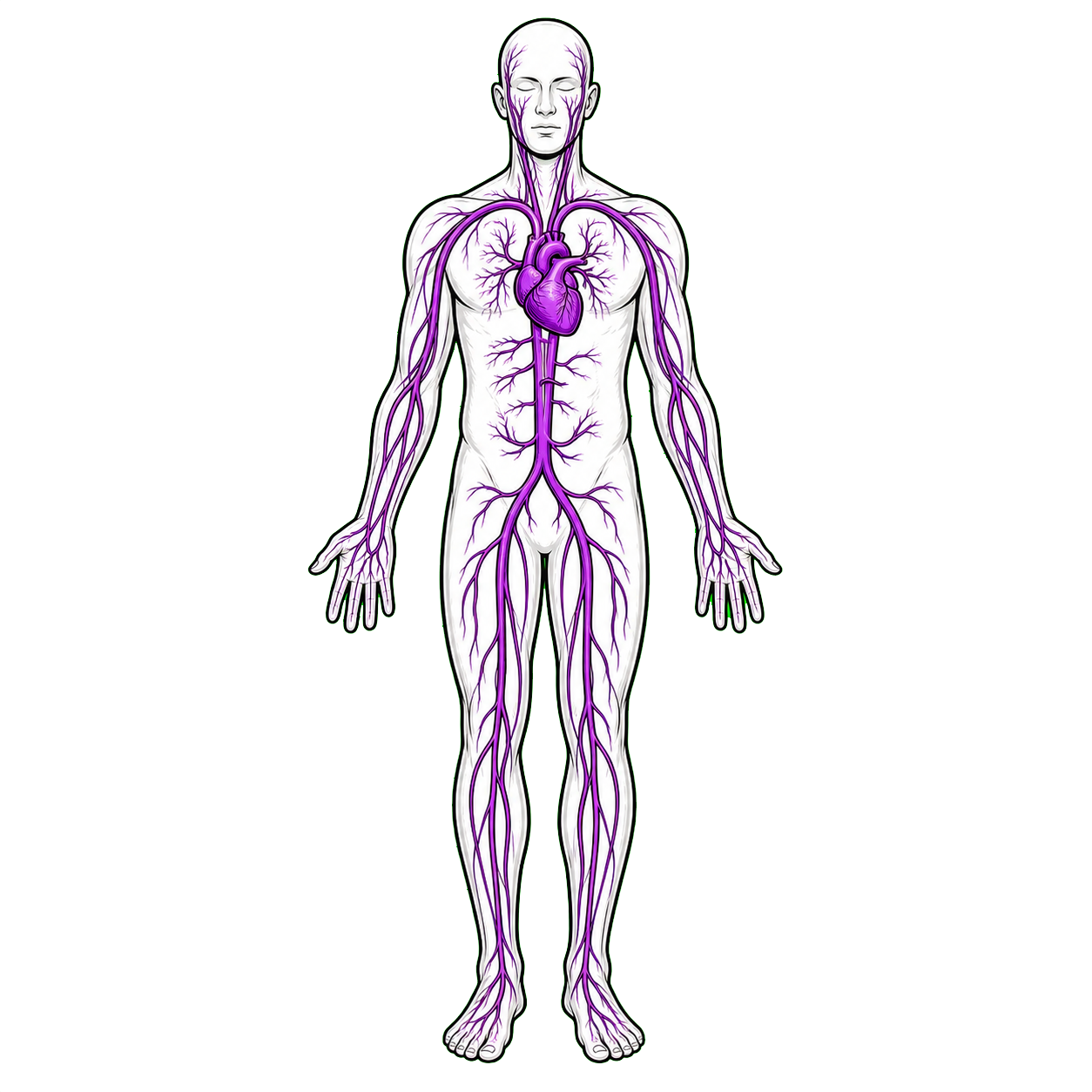
Jog Z2
Jog Z2 is a outdoor or treadmill jogging cardio format organized around 60–70% HRmax and an RPE of 2–3/10. Zone 2 targets aerobic base and sustainable health-oriented volume. Use heart rate together with perceived effort and the talk test because zone estimates vary between people.
Cardio
Compound
At a glance
Difficulty
Easy
Exercise Type
Cardio
Muscle Group
Cardiovascular
Equipment
Bodyweight
Force Type
Mixed
Mechanics
Compound
Why this exercise matters
Jog Z2 is the classic sustainable running session for aerobic health, endurance, and repeatable calorie expenditure.
- Long-term heart health — Improves long-duration endurance and supports healthier heart-and-artery function with regular practice.
- Weight-management support — Long, manageable sessions add meaningful energy expenditure and encourage fat oxidation; actual fat loss depends on the overall energy balance.
- Running durability — Gradual exposure strengthens tolerance of the feet, calves, tendons, and bones for future running.
- Pleasurable consistency — Conversational outdoor running can be social, calming, and easier to maintain than hard intervals.
How to perform
Use 30–60 min steady; for interval zones, include the listed easy recoveries. Effort should feel deliberately restrained.
- Warm-up — Begin with 5 minutes below the target zone and increase gradually.
- Enter the zone — Adjust pace and, when available, resistance or incline until effort matches 2–3/10
- Technique — Keep steps relaxed, land quietly under the body, and avoid sprint mechanics.
- Monitor — Check heart rate, breathing, and the talk test instead of following one number blindly.
- Cool-down — Finish with 5 minutes of easy movement and allow breathing to settle.
What to avoid
Heart-rate zones are estimates, and the same pace can produce different responses with heat, fatigue, stress, medication, hills, or dehydration.
- Zone mismatch — Slow down if breathing and RPE are harder than the displayed zone suggests.
- Warm-up — Do not enter Z4–Z5 abruptly; build intensity first.
- Impact/load — Increase running volume gradually and use walking if the intended zone cannot be maintained.
- Stop signs — Stop for chest pain, faintness, unusual breathlessness, or new sharp pain.
- Effective duration — Z2 must usually be longer than high-zone training; brief runs are mostly warm-up, so build toward roughly 30–60 minutes without letting pace rise.
Target Muscle