One-arm dumbbell row
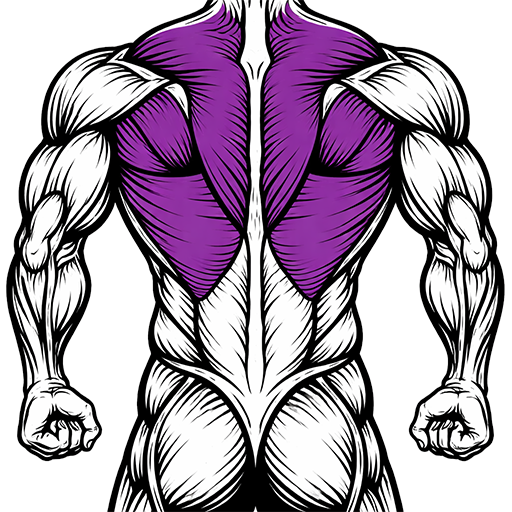
The one-arm dumbbell row is a unilateral horizontal pull for the upper back and lats, with the biceps and rear shoulders assisting. Supporting the body on a bench lets each side work independently while the trunk resists rotation.
Back
Compound
At a glance
Difficulty
Intermediate
Exercise Type
Hypertrophy
Muscle Group
Upper Back
Equipment
Dumbbell
Force Type
Pull
Mechanics
Compound
Why this exercise matters
This row matters because it combines direct back loading with independent left-right work and flexible positioning.
- Upper-back tension — The shoulder blade and elbow move against resistance.
- Unilateral control — Each side receives its own load and repetition count.
- Stable setup — Bench support reduces balance and lower-back demand.
- Easy progression — Dumbbell increments and repetition targets are simple to track.
How to perform
Use 2–4 sets of 8–15 repetitions per side and rest 90–150 seconds. Keep the load low enough to prevent torso rotation.
- Support — Place one hand and the same-side knee on a flat bench; keep the other foot stable.
- Start — Let the dumbbell hang under the shoulder with a long spine and level hips.
- Pull — Drive the free elbow toward the hip rather than straight toward the ceiling.
- Lower — Return the weight under control until the arm is long without losing trunk position.
- Switch — Complete the same range and repetitions on the opposite side.
What to avoid
The trunk should stay stable while the shoulder moves freely; a heavier dumbbell is not useful if rotation replaces the row.
- Torso twist — Keep the ribs and hips facing the floor.
- Shoulder shrug — Pull with the elbow without lifting the shoulder to the ear.
- Excessive reach — Do not round the lower back to gain extra range.
- Bench setup — Confirm the bench and planted foot cannot slip.
Target Muscle