Hip abduction machine
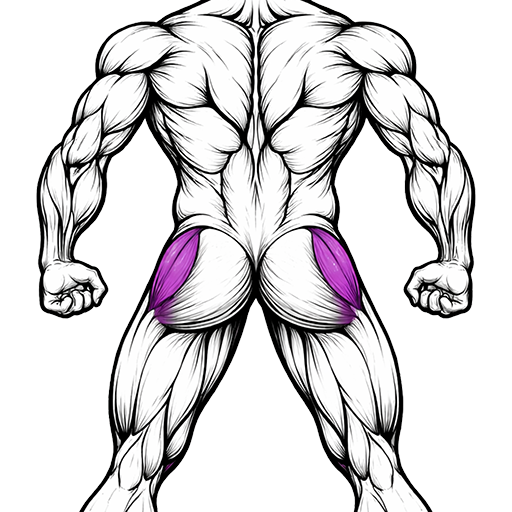
This hip abduction variation targets the outer hip and gluteal muscles, particularly the gluteus medius and minimus. The intended training outcome is direct hip-abductor loading with stable progression. The supported seated position allows focused effort and easily adjustable resistance without balance limiting the movement.
Legs
Isolated
At a glance
Each set to Failure
2 Sets
15 Reps
90s between sets
Difficulty
Easy
Exercise Type
Hypertrophy
Muscle Group
Abductors
Equipment
Machine
Force Type
Pull
Mechanics
Isolation
Why this exercise matters
The hip abduction machine directly loads the muscles that move the thighs away from the midline. Its supported seated position makes it easy to control the movement and increase resistance gradually.
- Primary stimulus — The hip abductors, including the gluteus medius and minimus, work alongside the tensor fasciae latae and portions of the gluteus maximus. Their contribution varies with hip position.
- Programming role — Add focused work for the lateral hip and gluteal muscles alongside squats, hinges, and other lower-body exercises.
- Why this version — The stable seat and adjustable resistance let you train hip abduction without balance becoming the limiting factor.
How to perform
Use 2–4 sets of 10–20 repetitions as a working template and rest about 60–120 seconds between sets. Choose a load that allows a controlled movement throughout the set.
- Equipment setup — Adjust the machine for abduction, with the pads against the outside of your thighs near the knees. Set a comfortable starting width and place your feet on the supports.
- Starting position — Sit evenly against the backrest with your thighs relatively close together. Hold the handles and keep your pelvis still.
- Repetition path — Press your thighs outward against the pads. Pause briefly at a comfortable endpoint, then return slowly without letting the weights slam together.
- Exercise-specific cue — Move from the hips while keeping your trunk steady and both thighs in contact with the pads. Exhale as you press outward and inhale as you return.
- Set endpoint — End the set when you can no longer repeat the same range and tempo without rocking or lifting off the seat.
What to avoid
Use a range that you can control comfortably. A wider opening is useful only while your pelvis stays stable and the movement remains smooth.
- Setup risk — Do not use the inward-facing adduction pad setting. Check the adjustment locks and weight pin before starting.
- Technique limit — Avoid bouncing, swinging your torso, lifting your hips, or forcing the legs beyond your comfortable range.
- Joint response — Stop the repetition if you feel sharp, increasing, or joint-specific pain. Reassess the setup and reduce the load or range before trying again; stop the exercise if pain persists.
- Progression — Increase resistance only when you can control the outward press and the return throughout every set.
Target Muscle